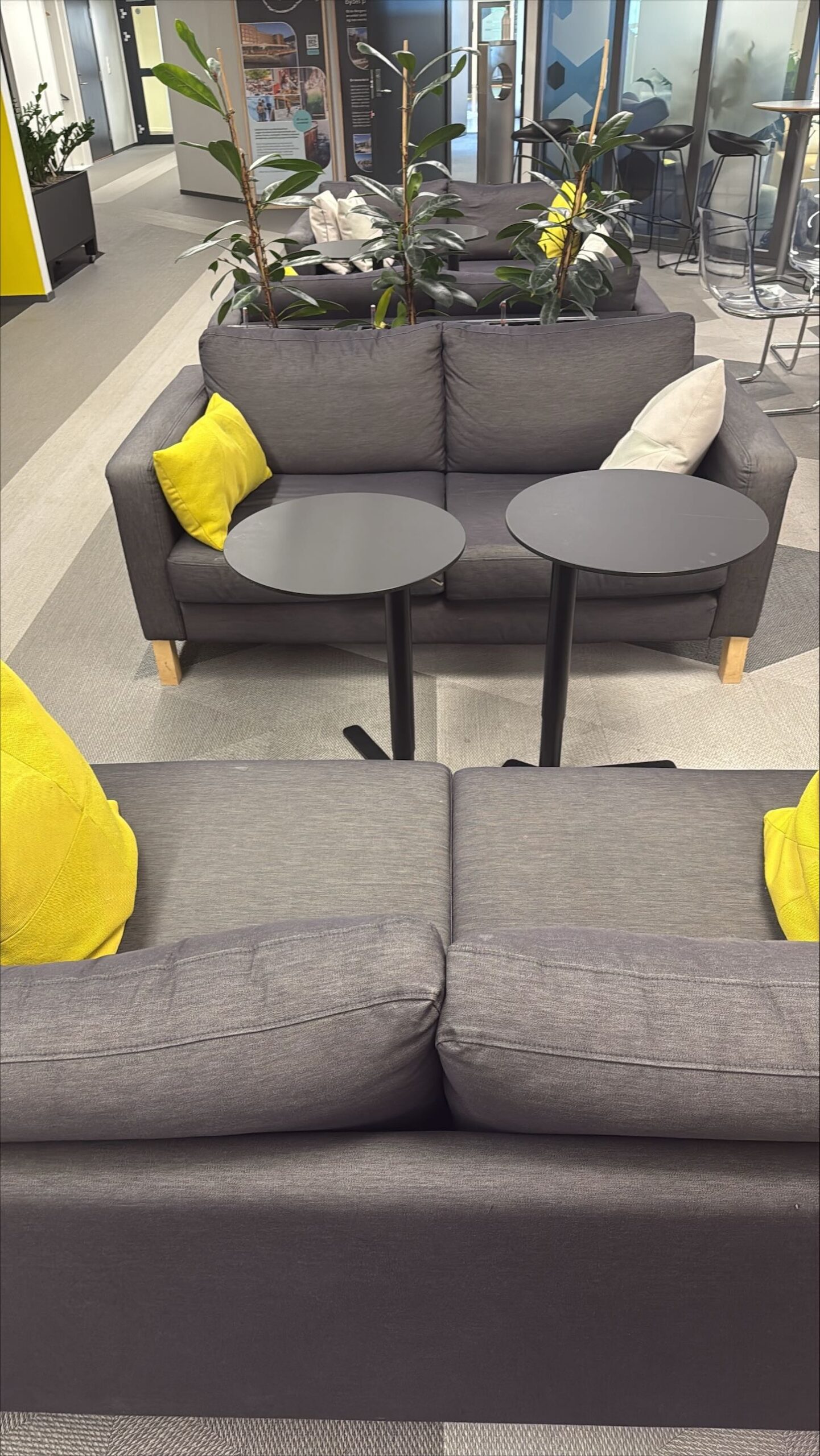

We often talk about sustainability as something we buy — recycled materials, ecolabels, green certificates. But the greenest piece of furniture is not the one you buy. It is the one you never have to buy again.
Every chair, every carpet and every sofa in a building carries a footprint long before it comes through the door: raw materials, production, dyeing and transport. That footprint has already been paid — environmentally and financially — the day the furniture is in place. The question that decides whether the investment was a wise one is how long it gets to stand there and look good.
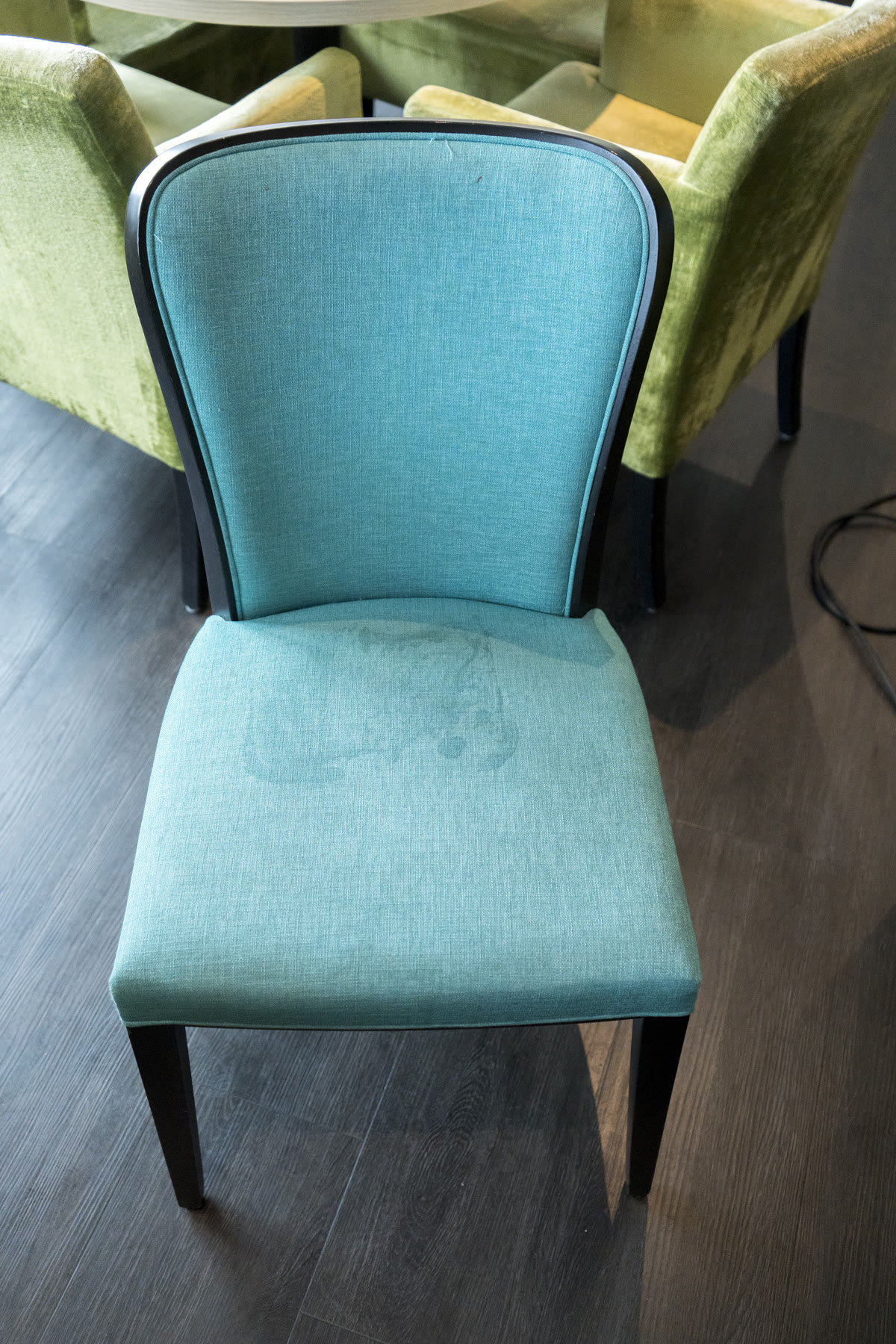
And here most businesses meet the same simple reality: where there are people, things get spilled. Serve food and drink, and more gets spilled. The only certainty is that spills will happen — the challenge is that nobody knows where, when or on what scale. Without protection, the spill soaks into the fibres and sets as permanent stains, and interiors that should have lasted for many years start looking worn long before they are worn out. So they are replaced, and a whole new footprint starts all over again.
Extending lifespan is the most overlooked climate action
A piece of furniture has the vast majority of its climate footprint behind it the day it is delivered. The use phase adds almost nothing. That means the climate effect of using a piece of furniture for longer is almost the entire emission of producing a new one — and every year we add spreads that same footprint over more time.
There is no recycled fibre that beats the piece of furniture you never had to throw away.
This is the core of the circular economy, and it is also the part that is easiest to act on. It requires no new technology and no major investment — only that you protect what you have already decided to buy.
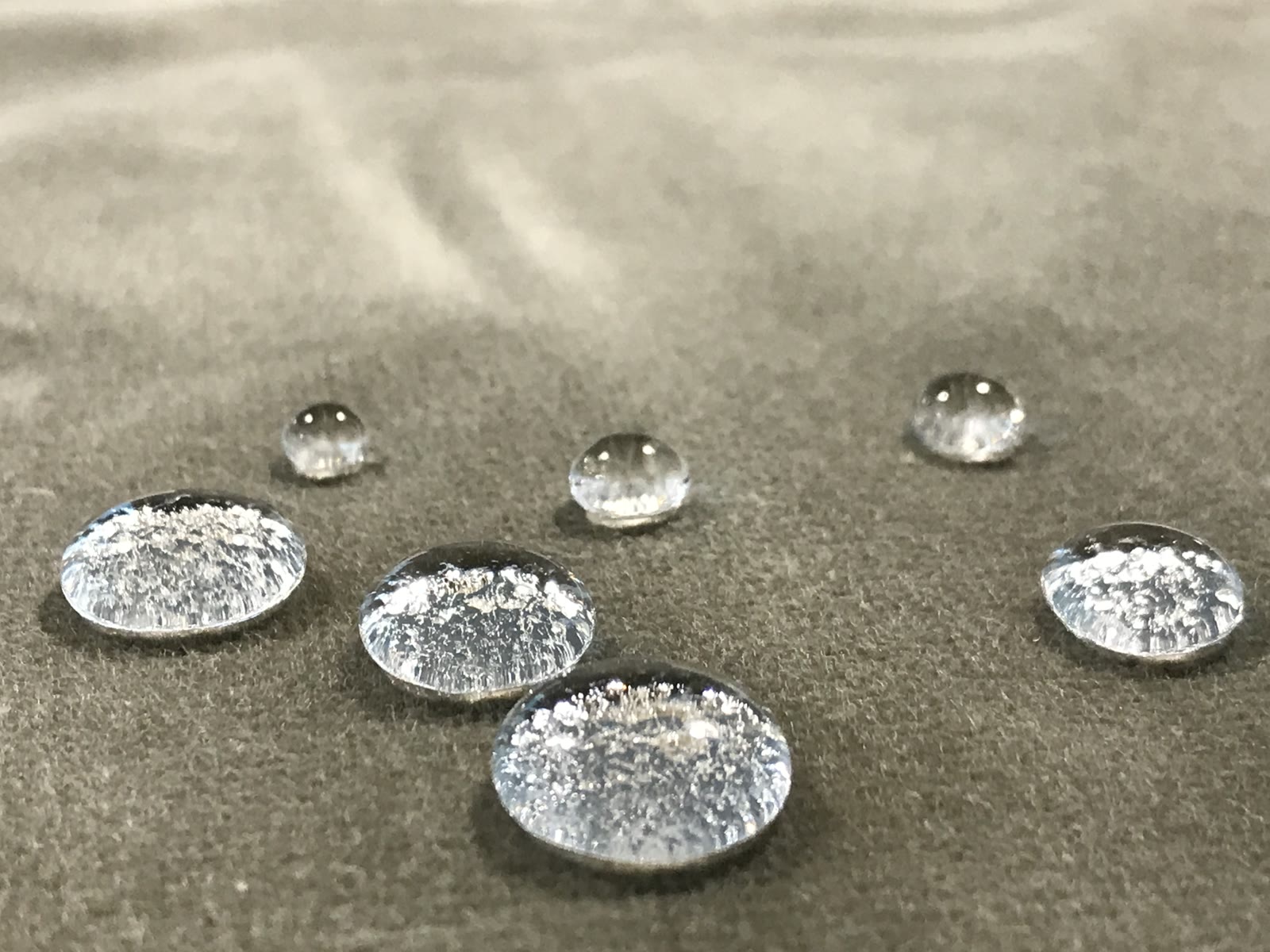
Preventive impregnation does exactly this. The treatment wraps an invisible shield around every single fibre. Liquid beads off instead of soaking in, dirt gets no grip, and most accidents are wiped away with water and a cloth — no chemicals, no deep cleaning, no panic. The fibres take less punishment from daily friction, colours stay brighter for longer, and the furniture looks just as inviting after five years as the day it was delivered.
Want to protect your interiors?
Our experts will help you find the best solution for your needs.
Sustainability must also be documentable
For us it is not enough that a treatment works — it also has to stand up in a sustainability account. Our products have been made in Norway since 1995 and are PFAS-free, produced to the strictest environmental requirements possible. The impregnation is attested by Eurofins and qualifies for BREEAM Exemplary Level in five countries, the products are certified by WoolSafe and CleanSeal, and our cleaning product carries the Nordic Swan Ecolabel. For you as a customer, that means the extended lifespan is not just something we promise — it is something you can document in your own sustainability reporting.
What it takes
Securing an investment for a long life is less about luck and more about a simple plan:
- Think protection while the interiors are new. That is when the treatment gives the most — you are protecting a clean, unused surface before the first spill has a chance to set.
- Put maintenance into a system. Planned cycles instead of firefighting give predictable costs and interiors that are never allowed to look worn.
- Not got round to it yet? It is never too late. Interiors already in use can be cleaned back to a clean state and then protected — more on that in a separate article.
Sustainability and sound finances rarely pull in opposite directions here. They point the same way: look after what you have, so it lasts longer. That is good for the accounts, good for the interiors — and good for the planet.
Jo E.L. Lerheim
Managing Director, Fiber ProTector Norge AS
The service that makes it practically possible: UpCycle® — restoration cleaning for used interiors.